
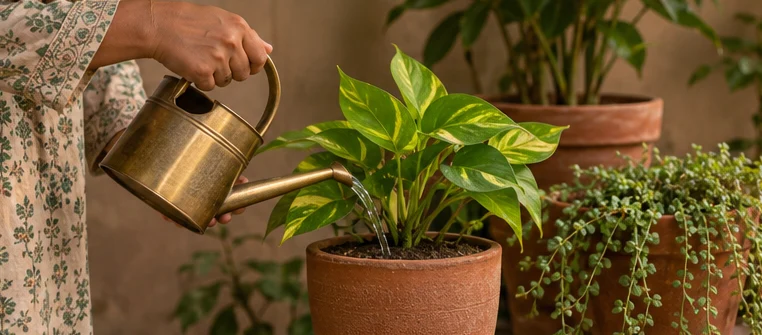
Use the path of the sun across your balcony or room to choose a spot that suits each plant.
Map your light
Observe the spot in the morning, around noon and in late afternoon. Write down when sunlight actually falls on the leaves. Nearby buildings, balcony roofs, tinted glass and curtains can reduce the duration or intensity of direct sunlight.
Match the plant to the spot
Many sun-loving flowering plants, such as roses and bougainvillea, bloom best with several hours of direct sun. Plants grown for indoor foliage, such as many philodendrons and pothos, usually suit bright indirect light. Use the care instructions for your species as a starting point.
Move plants gradually
Increase exposure in stages when moving a plant out of shade. In a Noida summer, east-facing spots can offer morning sun with relief from the hottest afternoon rays. Adjust the position as the seasons change.
Read new growth
Long gaps between new leaves or shoots leaning towards a window can indicate insufficient light. Pale or dry patches on the exposed side after a move can indicate sunburn. Watch new growth after adjusting the position.
Compare an east-facing balcony with a bright indoor window
Watch an east-facing balcony early in the day to see where direct sun actually lands. A flowering pot can sit where it receives the longest suitable exposure. Indoors, place a pothos where it sees plenty of sky but strong sun rarely falls on its leaves. Repeat the check as the season changes.
Frequently Asked Questions
Is morning sunlight enough for flowering plants?
It depends on the species and the duration of direct sun. If a sun-loving plant grows well but sets few buds, measure the hours of direct light and check the plant’s requirements before moving it.
How can I tell direct sun from bright indirect light?
In direct sun, the sun’s rays hit the leaves and cast a distinct shadow. Bright indirect light can still illuminate the plant strongly, with softer shadows and no direct beam.