
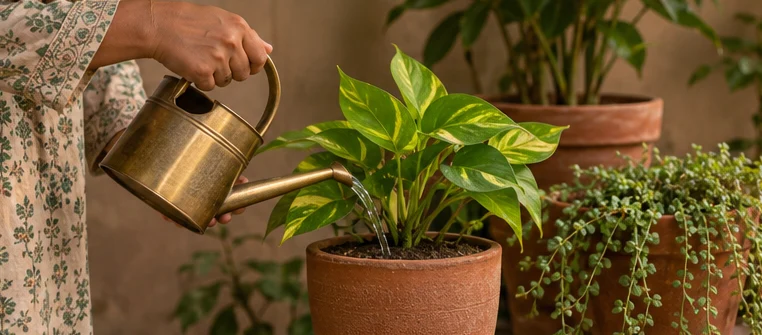
Gently remove dust from smooth leaves and use cleaning time to check for pests.
Wipe smooth leaves gently
Support each large leaf from underneath, then wipe with a soft cloth dampened with plain water. Rinse the cloth as it picks up dust. Clean the undersides where practical, especially near the central vein.
Use a method suited to the leaf
A soft dry brush is useful for fuzzy or delicate leaves. For sturdy plants with many small leaves, a gentle lukewarm rinse can be easier. Let the pot drain in a spot with airflow, and protect the mix if it has already been watered.
Skip surface coatings
Plain water is enough for routine dust removal. Avoid applying oil, household polish or leaf-shine products as part of cleaning. Dust shelves and windowsills too so less of it settles back onto the leaves.
Look for pests as you go
Inspect leaf joints and undersides for sticky residue, fine webbing, raised bumps or white cottony patches. If you see several signs of pests, move the plant away from nearby plants while you identify the cause.
Clean a rubber plant without damaging new leaves
Support a mature leaf with your palm and make one gentle pass from the stem end toward the tip. Use a clean part of the cloth for the next leaf. Leave newly unfolding leaves alone until they firm up. If a leaf has stubborn spots, look closely before rubbing harder. The marks could be mineral deposits, residue or pests.
Frequently Asked Questions
How often should I clean indoor plant leaves?
Check them when you water. Wipe when a visible film collects. Plants near open windows or construction may collect dust sooner.
Can I use oil to make indoor plant leaves shine?
Use plain water for routine cleaning. Oil can leave a residue that attracts more dust. A clean damp cloth is usually enough for smooth, sturdy leaves.